


Growing Notes
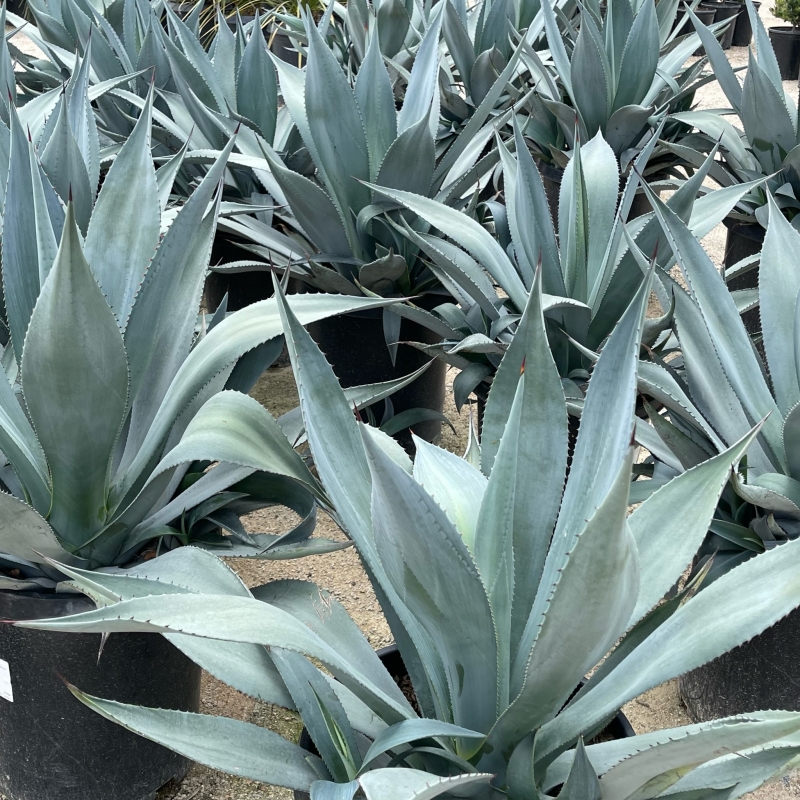
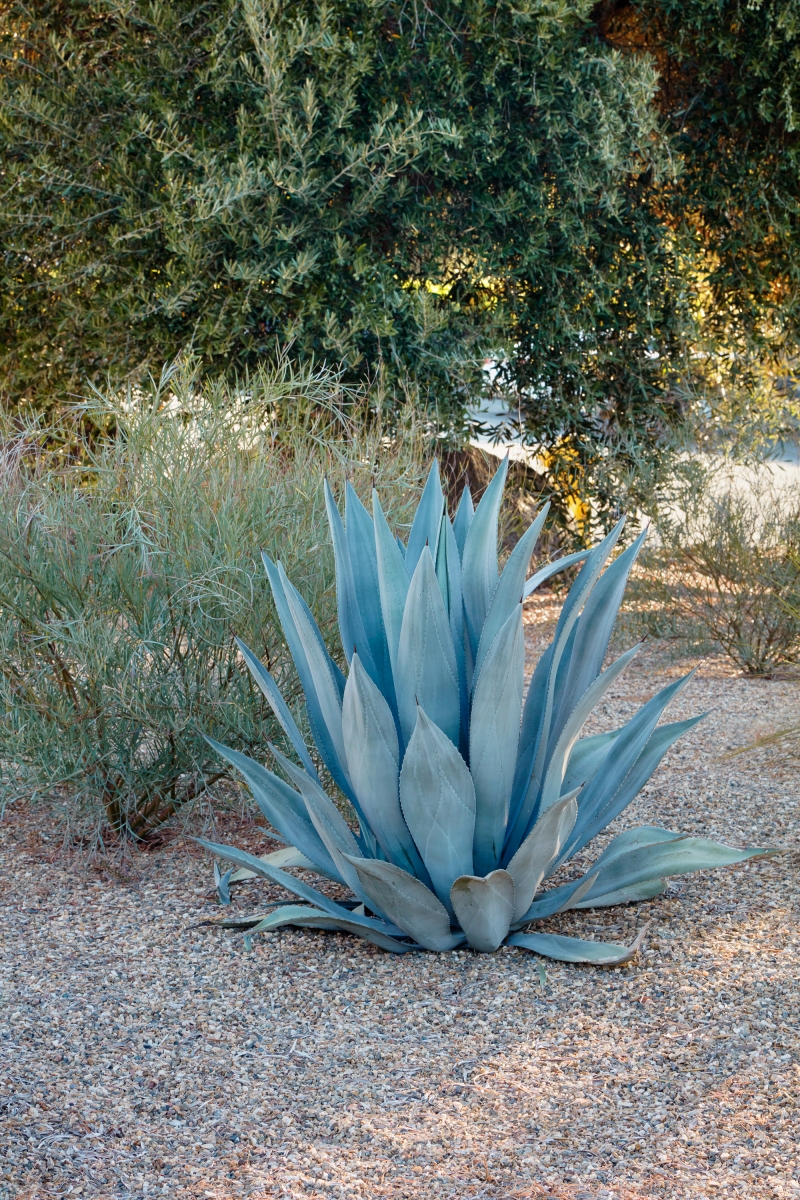
Most agave, including A. franzosinii, are monocarpic, meaning that a head will grow larger and larger over time, building up energy, then send off a spectacular flower (this one is yellow) and afterward decline and die. With pupping varieties like this one, they grow from stolons at the base, constantly replacing the older bloomed out heads with new ones, which then grow larger and flower, continuing the life cycle. A franzosinii pups sparingly though and it’s easy to remove them, creating a single dramatic focal plant.
Take care when pruning or removing agave, as many have a toxic sap that causes inflammation and rashing. Removing spent agave heads can also be tricky as they are often ringed with other armed agave. If you like the look of agave, but are threatened by the terminal spikes they can be removed. It’s easiest to cut these off when they are coming out of the rosette as you’ll be able to prune the thorns off many layers of leaves at one time.
You can ‘pineapple’ your agave, by removing the lowest leaves. This is best started while it is out of the nursery can, but before planting, when you can access leaves from the bottom. This gives the plant a short trunk, textured similar to many palms, and allows you to get under the plant for weeding or removing pups.
Agave, even very large ones, are surprisingly well suited to pot culture. Agave that would normally be ten feet in the ground tend to settle into even small pots and stay in harmonious balance. Every few years, if they start to stall, you can remove them and trim back a third of the roots and remove any pups. Sometimes they get very root bound and it can be beneficial to bottom water, setting them in a saucer of water for a day.