Growing Notes
Palms are generally heavy feeders, so if you want them growing quickly and looking their best, they should be fertilized at least three times a year. Fertilizing at spring equinox, summer solstice and fall equinox will allow for a winter rest. Be sure to feed your palm with a fertilizer that contains micronutrients, especially if you see yellowing leaves or yellow spots on the leaves. Be sure your palm fertilizer contains micronutrients, particularly magnesium.
Chamaedorea radicalis is the hardiest species in the genus, tolerant of temperatures as low as 18F, and a great plant for anywhere where summer days regularly reach at least the upper 60s F and winter mornings stay above 20F. That’s pretty much everywhere our customers live besides the immediate coast. It’s a slower-growing single-stem species that becomes a dainty palm tree, and looks its best when planted in groups, not least because it may form colorful fruit when cross-pollination occurs, and it’s easy to get seeds to sprout in place and add to the group. (Remember, the genus has male and female flowers on separate individuals.) It will tolerate more sun than most, especially if it’s given sufficient irrigation; yet it’s not a thirsty plant. This is a good houseplant
This solitary palm will grow only one trunk during its lifetime. If you have a pot with multiple trunks in it, that’s because multiple separate palm trees were germinated in the pot. The good news is that you won’t need to thin out suckers over time to maintain the number of trunks you started out with.
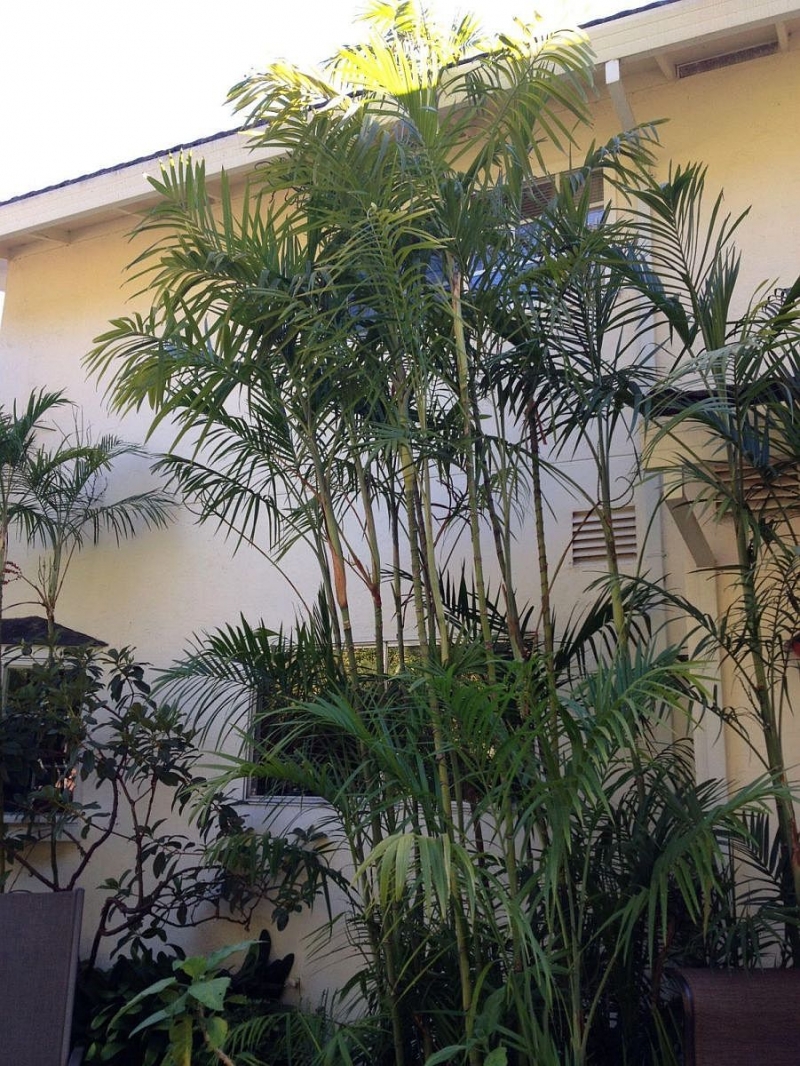
You can prune off older chamaedorea leaves when they start to look ratty, or wait until they are completely dried up. Either way, once the leaf sheath (the part of the leaf that wraps around the trunk of the palm) dries up, you can just pull it right off, exposing the green trunk. Once this is done, your palm trunks will resemble bamboo canes.
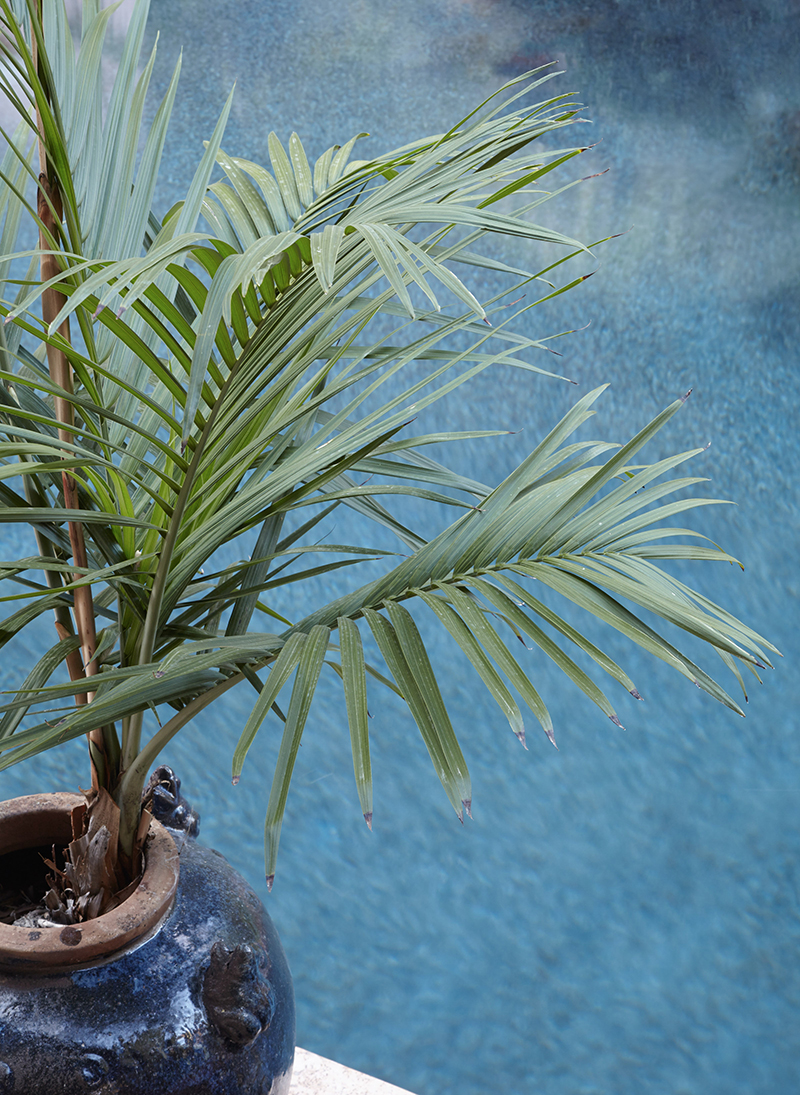
With leaves growing in a single plane along most of the rachis, the feather palm has an elegant look to it.